How long should a resume be? Length by career stage
One page or two? Choose a resume length for your career stage, see a three-version formatting comparison, and learn the federal two-page rule.

Start with the job posting. The University of Michigan’s career center says that a well-supported two-page resume can be appropriate, although some employers specifically request one page. There is no substitute for following the instructions for the position.
Resume length by career stage
These are practical starting points, not rules every employer follows. Our guide to resume sections explains what each section is for.
| Your situation | Good starting length | What to include |
|---|---|---|
| Student or new graduate | One page | Education, projects, internships, relevant work, and skills |
| Early-career applicant | One page | Your strongest relevant roles and clear examples of work |
| Career changer | One or two pages | Transferable experience, recent learning, and relevant projects |
| Mid-career professional | One or two pages | Relevant roles, progression, and achievements |
| Senior leader | Often two pages | Leadership scope, selected accomplishments, and key roles |
| Academic or research CV | Depends on the field | Research, teaching, publications, and scholarly work |
Do not stretch a short resume to meet a page target. Likewise, a second page can be reasonable when it adds useful evidence. An academic CV follows different conventions; Harvard’s CV guidance does not prescribe a fixed page limit for that format.
When one page works best
Choose one page if it gives a hiring team enough relevant information and remains easy to scan. For a student, that might mean putting a project above a brief part-time role. For an early-career applicant, it might mean showing several good experience bullets instead of describing every responsibility.
Keep the sections that help explain your fit. Avoid adding unrelated coursework, an oversized personal statement, or a long list of generic strengths just to fill the page. Our resume objective guide shows when a short opening statement earns its space.
When two pages are worth keeping
Use two pages when compressing the resume would remove meaningful experience. A second page can hold a distinct earlier role, relevant certifications, or projects that demonstrate skills named in the job description.
Read that second page by itself. Does it add information that changes how someone would understand your experience? If not, edit. If it does, keep it, but check the final page break so a heading or stray bullet is not stranded.
The University of Washington’s career guidance describes one to two pages as a common industry-resume range and emphasizes relevant experience rather than filling space.
We compared three versions of a fictional resume
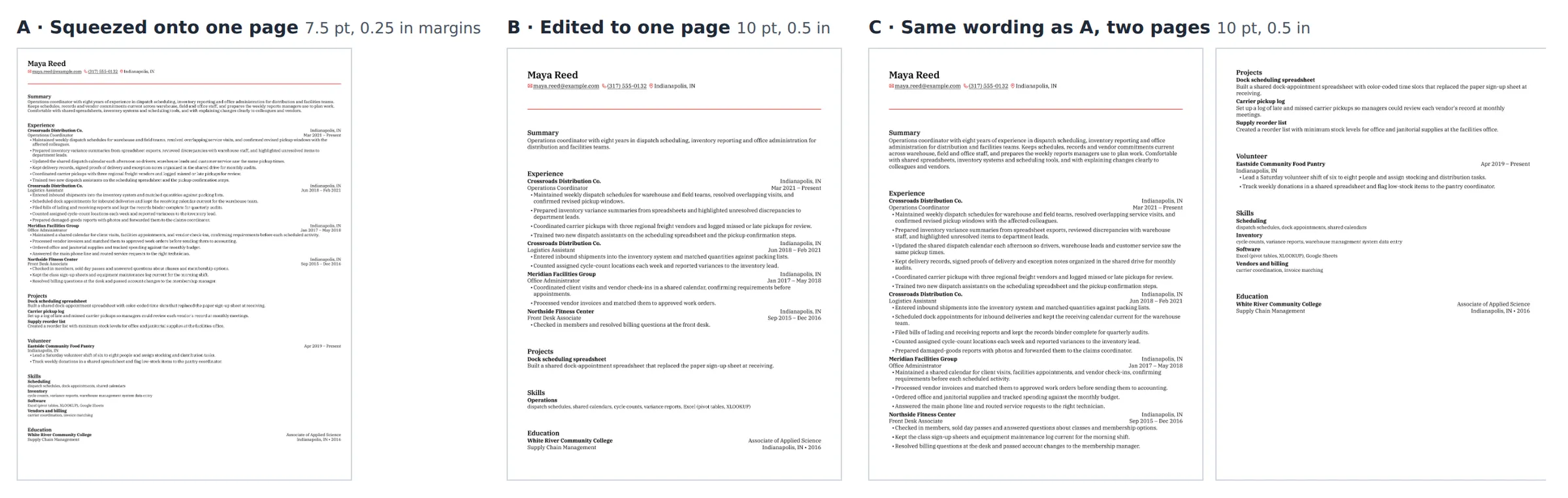
To compare formatting and editing choices, we built a resume for Maya Reed, a fictional operations coordinator, in the ResumeUnbox editor and exported three US-letter PDFs. Versions A and C contain identical wording. Version B keeps her job titles and dates while removing repeated or less relevant detail. The figure below shows the actual exported pages, not decorative mockups.
| Version | Pages | Body font | Margins | PDF text extracted |
|---|---|---|---|---|
| A: compressed full resume | 1 | 7.5 pt | 0.25 in | 570 words |
| B: shorter, edited resume | 1 | 10 pt | 0.5 in | 252 words |
| C: readable full resume | 2 | 10 pt | 0.5 in | 570 words |
Method: We set the body font, margins and line spacing in the editor, exported each version as a PDF, checked its page count and counted the words returned by PDF text extraction. On November 3, 2026 we ran each PDF through the ResumeUnbox ATS-style checker without a job posting:
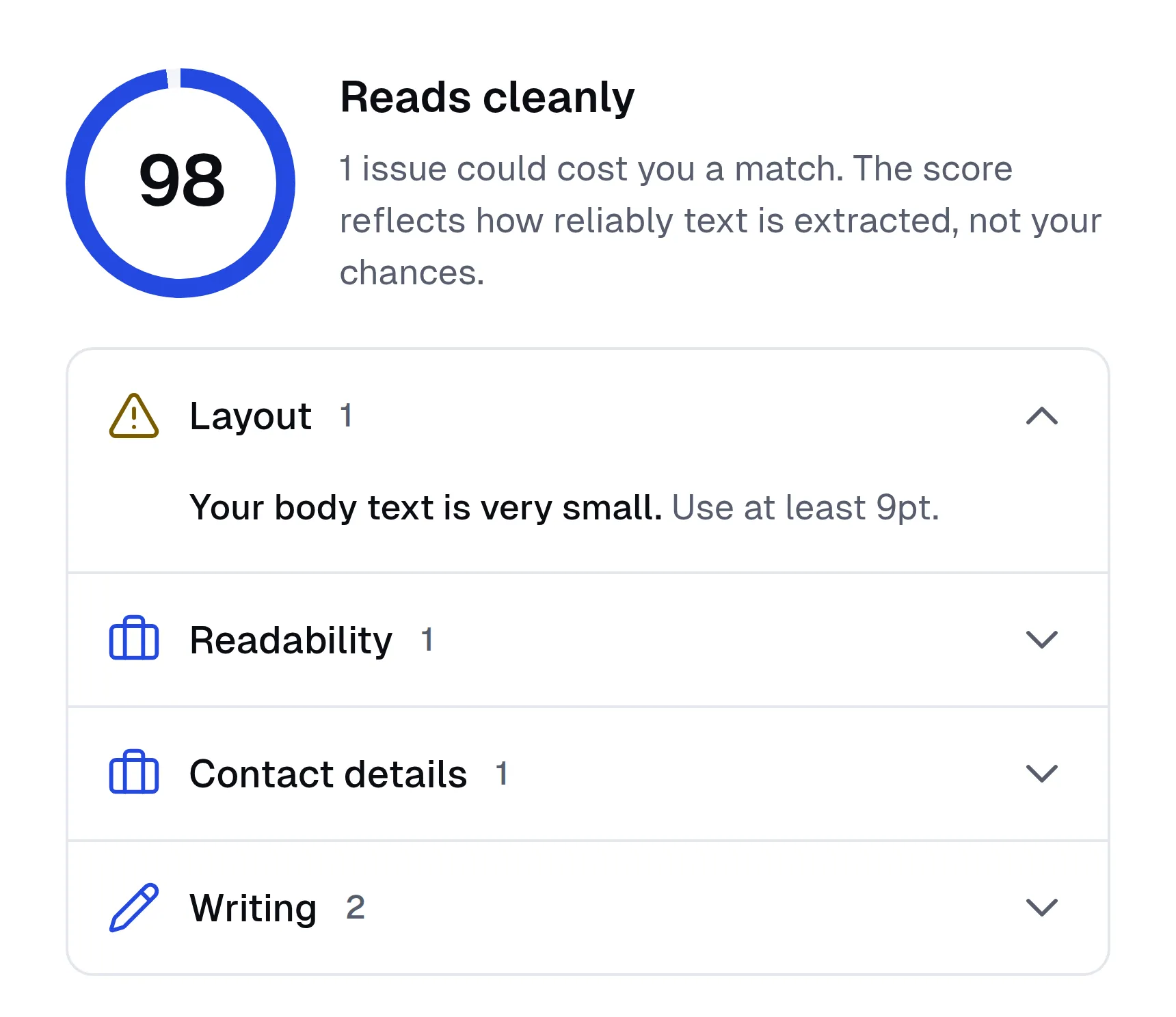
- A: 98, with one layout note: “Your body text is very small. Use at least 9pt.”
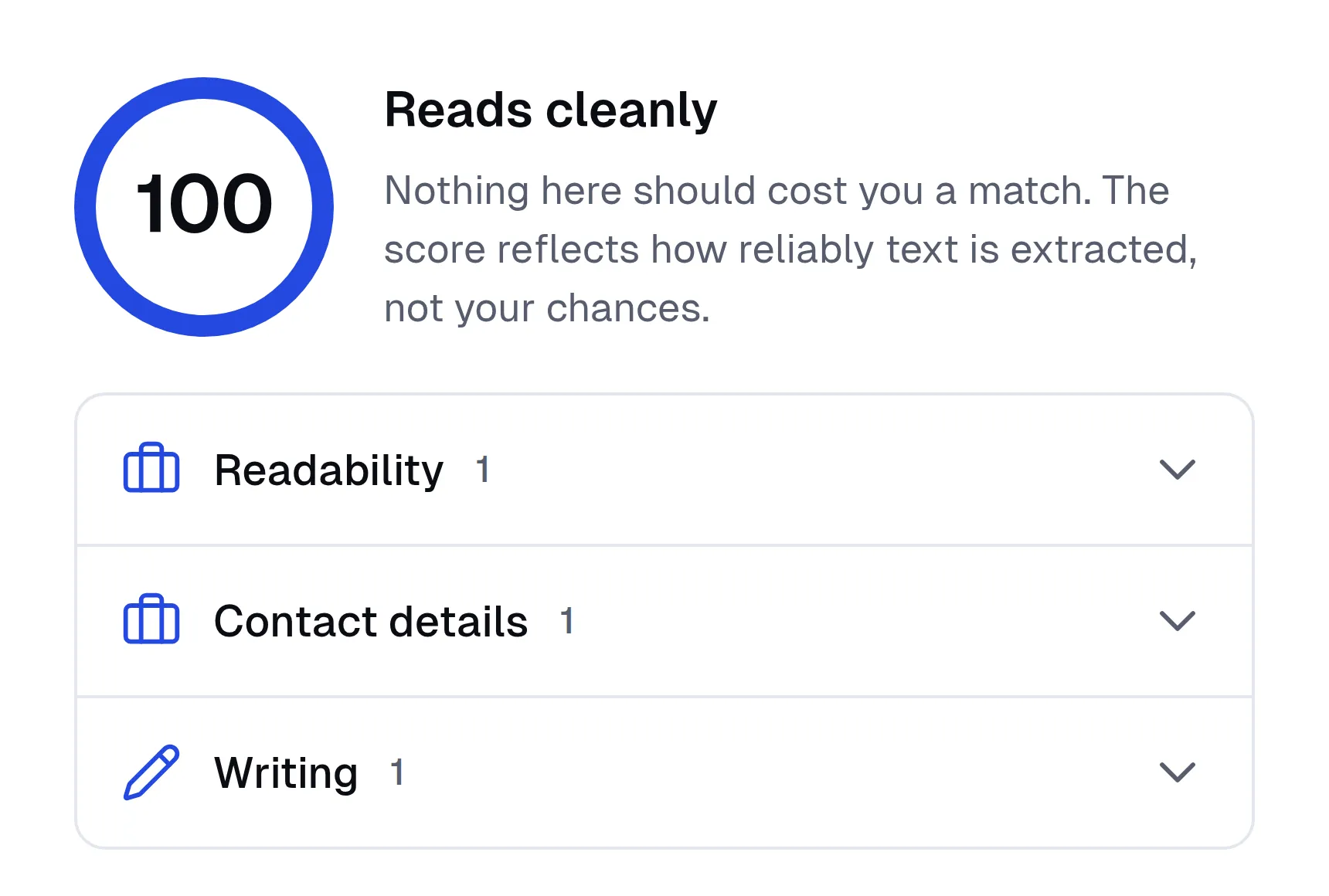
- B: 100, with no layout note.
- C: 100. Its second page raised no length note; the checker only comments on length above three pages.
All three got the same notes about accessibility tags and a profile link. A and C, which share their wording, also got a note that most bullets open with filler; B’s edit removed several of those bullets.
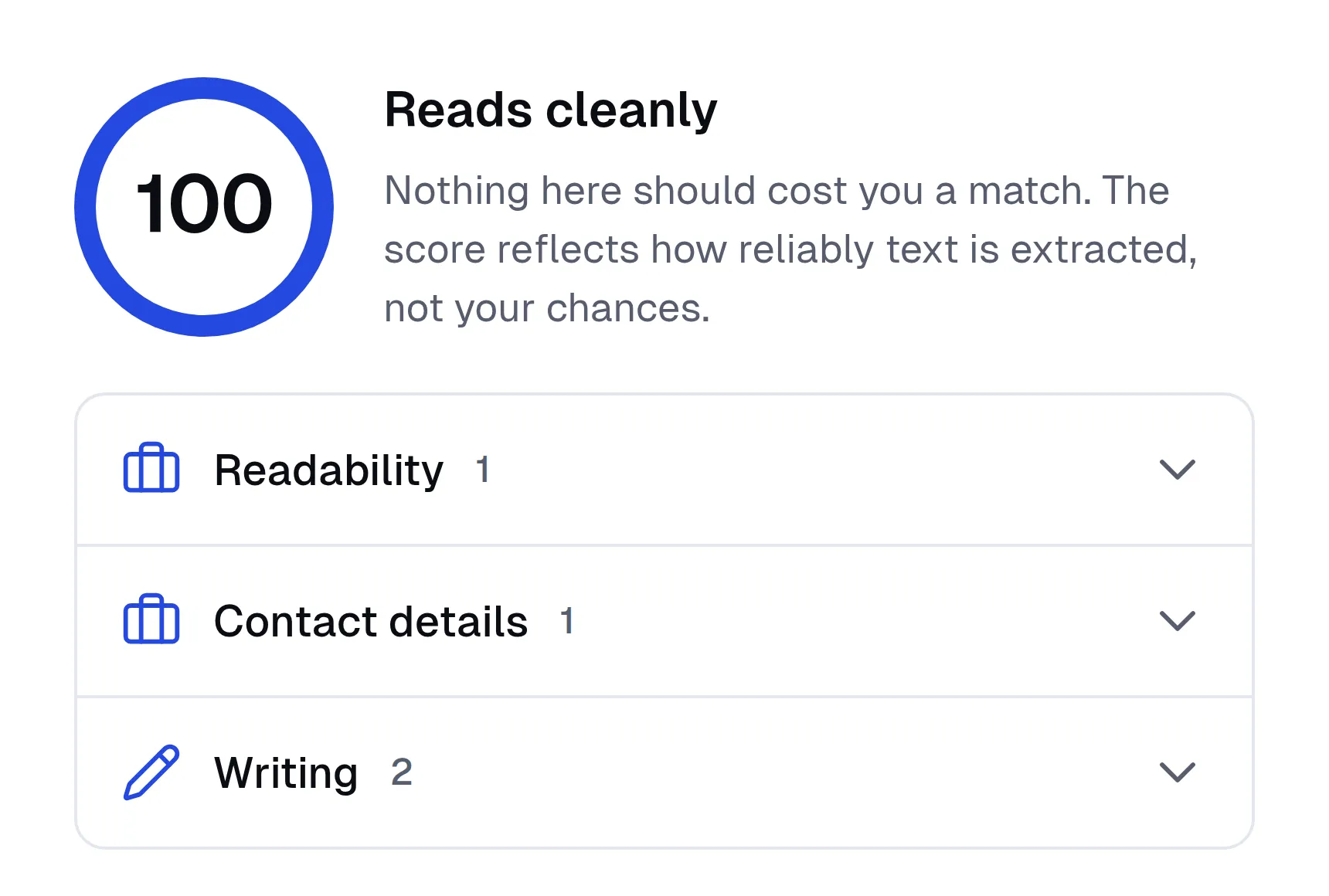
These are our checker’s results for fictional files, not hiring probabilities.
Version A: everything on one page
Using 7.5-point body text, quarter-inch margins and tighter line spacing kept all 570 words on one page. Text extraction succeeded, but the page is crowded and harder to read than the edited version, and the checker flagged the small text. Successfully extracting text does not prove that all hiring systems will interpret it the same way.
You can check your own PDF with an ATS-style readability check before applying. It helps you inspect the document, but cannot predict a hiring decision. For a comparison of actual PDF layouts, see our ATS-friendly resume test.
Version B: change the writing, not just the layout
The edited version keeps Maya’s work history and the most relevant responsibilities while reducing the sample from 570 to 252 extracted words. We shortened the profile, removed overlapping schedule and record-keeping bullets, condensed older administrative work, kept one selected project instead of detailed descriptions of several, merged the skills into one line and left out the volunteer entry. That allowed a larger, easier-to-read type size on one page.
These are actual before-and-after lines from the fictional sample PDFs, not claimed results from a real applicant:
Dispatch scheduling
- Before: Maintained weekly dispatch schedules for warehouse and field teams, resolved overlapping service visits, and confirmed revised pickup windows with the affected colleagues.
- After: Maintained weekly dispatch schedules for warehouse and field teams, resolved overlapping visits, and confirmed revised pickup windows.
Inventory reporting
- Before: Prepared inventory variance summaries from spreadsheet exports, reviewed discrepancies with warehouse staff, and highlighted unresolved items to department leads.
- After: Prepared inventory variance summaries from spreadsheets and highlighted unresolved discrepancies to department leads.
Office administration
- Before: Maintained a shared calendar for client visits, facilities appointments, and vendor check-ins, confirming requirements before each scheduled activity.
- After: Coordinated client visits and vendor check-ins in a shared calendar, confirming requirements before appointments.
The shorter bullets retain the tasks that matter for this fictional operations role. For your own resume, keep accurate detail when it demonstrates a requirement in the posting; cutting words is not worth losing relevant evidence.
Version C: keep the relevant detail
The full wording, set in a more readable layout, spans two pages. That additional page is worthwhile only when the information it contains matters to the employer. The point is to choose the content first, then choose a layout that shows it clearly.
For another look at PDF extraction and format decisions, read our ATS-friendly resume guide. Its tests focus on document structure rather than page count.
How to shorten a resume without losing its value
Work through these edits before reducing font size, then use our resume font comparison to choose readable type and check your exported PDF.
- Prioritize the role. Identify the experience and skills requested in the posting that you can truthfully demonstrate.
- Remove repeated descriptions. You do not need nearly identical scheduling or reporting bullets under every past job.
- Summarize older roles. Keep dates, titles, and useful evidence, but give the most space to relevant work.
- Replace vague bullets. Say what you handled, the method you used, and what changed when you can support that result.
- Trim optional sections. Include volunteer roles, awards, and memberships when they strengthen this application. References usually belong on a separate page; see our guide to references.
- Check spacing last. Review headings, readable type, margins, and page breaks after making content edits.
Harvard’s resume guidance recommends legible text around 10–12 pt and margins of at least half an inch for its graduate-student audience. It is a useful readability reference, not a requirement imposed by every private employer.
How far back should your resume go?
There is no universal cutoff. As an editing rule of thumb, give more detail to recent, relevant work and shorten older experience when it duplicates what later roles already show.
Keep an older job when it demonstrates a qualification that the employer needs to see. You can summarize less relevant work without changing the facts. Follow the employer’s application instructions if it separately asks for a complete employment history.
Federal resumes: USAJOBS limits them to two pages
For a US federal application submitted through USAJOBS, length is a formal requirement. The USAJOBS Help Center, updated October 21, 2026, confirms that resumes must be no more than two pages.
The Office of Personnel Management’s guidance says the limit took effect on September 27, 2025, for the covered hiring announcements. An overlength resume can make an applicant ineligible. Some medical and research applications may call for a CV as a separate document when the announcement instructs applicants to provide one.
That federal rule does not automatically apply to private-sector jobs. Read the posting before you decide which version to submit.
Does research favor one page or two?
A ResumeGo study involved 482 professionals in a simulated hiring exercise. Participants chose two-page resumes 2.3 times as often as one-page counterparts. The one-page samples contained 350–500 words, compared with 700–850 words for the two-page versions.
Those word counts describe the study’s documents, not recommended targets. ResumeGo is a resume-writing vendor; the exercise was simulated, and the longer resumes contained more information. The research challenges an absolute one-page rule but cannot tell you whether a particular employer will prefer your longer version.
Check your final resume
Before sending your final PDF, try an ATS-style readability check, then inspect its layout and selectable text yourself. If you are sending a cover letter too, check its length separately. Our ATS-friendly resume checklist explains how to evaluate PDF readability. You can find more practical examples in the ResumeUnbox writing guides or explore ResumeUnbox.
Common questions
Should every resume fit on one page?
No. One page is often useful early in your career, but two pages can make sense when they contain relevant experience. Follow a requested page limit.
Is a two-page resume OK with five years of experience?
It can be. Review what the second page adds. Keep it if it demonstrates relevant skills or experience that would otherwise be missing.
Can a resume be three pages?
Some specialist applications and academic CVs have different conventions. For most private-sector resumes, start with one or two pages and check the specific posting.